

Atomic Server
Fast open source headless CMS
Overview
Atomic Server is an extremely fast open source headless CMS with built-in live synchronization, file management, and full-text search.
MIT
Best for:
Features
Pricing
Compatible Technologies
Technical Features
Community
1500
GitHub Stars
500+
Discord Members
2026-02-12
Last Update
Enterprise Features
Security & Compliance
Find Atomic Server Experts
Looking for professional help with your Atomic Server project? Here are top certified agencies and developers.
Top Agencies

Alpina Tech
#1 RecommendedCraft custom, responsive websites using expert code and stunning design. Build your site with a flexible CMS and premium hosting to boost your digital presence.

Tentwenty Digital Agency
Tentwenty Digital Agency specializes in addressing complex client challenges through a combination of cutting-edge UI/UX design and seamless technical integration.

GRANITE
We are a global digital transformation partner with over 160 industry experts, delivering comprehensive digital solutions across experience design, technology engineering, digital marketing, brand innovation, and video production.

FocusReactive
#1 RecommendedWeb development agency with deep expertise in the headless CMS market.

NOTUM
#1 RecommendedWe are CMS-centered agency with 7 years of CMS experience. We build scalable corporate websites for scale-ups with headless CMS solutions. From design to deployment, we deliver complete, reliable support.
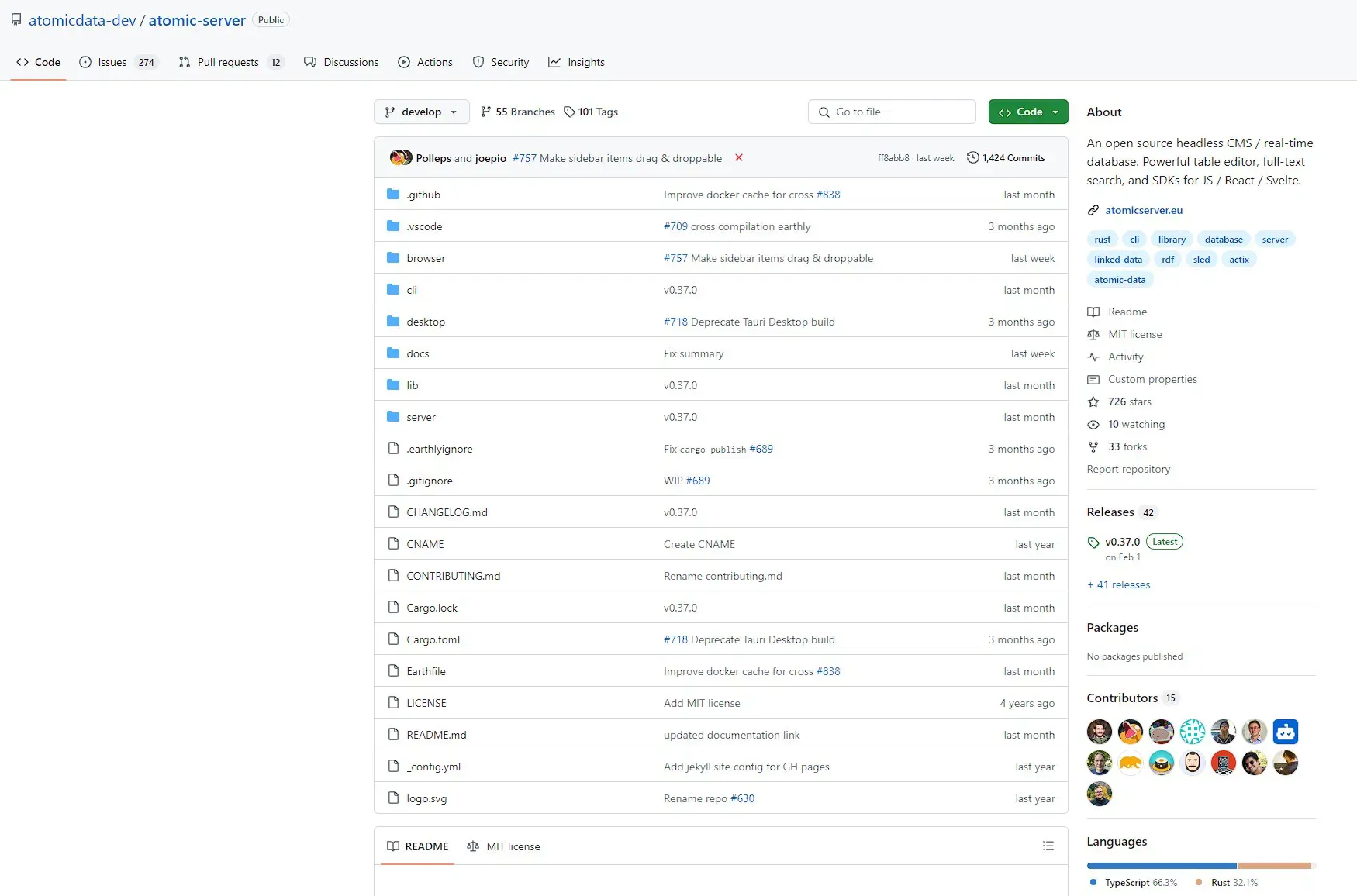
Atomic Server is an open-source headless CMS and graph database written in Rust, built as the reference implementation of the Atomic Data specification. It combines real-time content management with linked data principles, storing typed JSON documents as interconnected nodes in a knowledge graph — an approach that prioritizes data interoperability and semantic relationships between content entities.
Key Features and Benefits
What sets Atomic Server apart is its exceptional performance and minimal footprint — the entire server is an 8MB binary with sub-millisecond response times and no external database dependencies. Developers access content through a REST API with multiple serialization formats, including JSON, JSON-AD, and standard linked data formats like JSON-LD and RDF/XML. The platform provides real-time synchronization through WebSockets, event-sourced versioning with full change history, built-in full-text search, and dynamic schema validation using Atomic Schema for type-safe content modeling. Official SDKs for JavaScript, TypeScript, React, and Svelte streamline frontend integration, while the included browser-based GUI offers dynamic forms, table editors, and hierarchical permission management for editorial teams.
Use Cases and Target Audience
Atomic Server appeals to developers building data-rich applications where content management intersects with structured, interlinked datasets. It suits projects requiring semantic data modeling, real-time collaborative editing, or high interoperability between systems — from knowledge bases and research platforms to decentralized content architectures where linked data standards and lightweight self-hosted infrastructure are priorities.